

For this entry of Phantom Limbs, we’ll be travelling again to the twentieth century for an exploration of Phantasm 1999, Roger Avary’s (Pulp Fiction, Rules of Attraction) unproduced screenplay which was going to be the fourth installment within the long-running sci-fi/horror movie franchise. Intended for Phantasm collection creator Don Coscarelli to direct, 1999 boasted an epic post-apocalyptic story which might have acted as both a franchise capper, or a reboot which could have led to additional sequels.
Joining us for this entry is Mr. Coscarelli, who discusses the mission’s origins with Avary’s script, the story it will have informed, why it finally went unmade, and what future this specific story might but maintain.
“Let me give you a little background about my longtime friendship with him,” Coscarelli begins, charting the beginning of his affiliation with Roger Avary. “I used to be making a film known as Survival Quest within the late Eighties, method again. I employed an apprentice/intern that grew to become my assistant editor on the movie, a man named Scott Magill. Scott was part of this little movie pack down within the south bay of LA. In that group have been a dozen of his younger movie buddies. They have been all the time watching films collectively, making films collectively, critiquing one another’s movies. It was a cool little factor, and we ended up hiring a bunch of them to work on our movie in entry-level jobs. I all the time appreciated to work with younger individuals on my movies, aspiring filmmakers. I like the passion, which these guys all had.
“Part of that group who had moved on a little bit and didn’t want to work on other people’s movies were Roger and Quentin [Tarantino]. But Roger used to hang out in our editing room all the time, because back in those days we had a desktop computer, and those were kind of rare. So he and his friend Scott, my assistant editor, they were constantly, on weekends and at nights, writing screenplays in the office there. So I got to know Roger, I think when he was 19 years old, and he was just a really smart, bright young guy, and I stayed friends with him through the years.”

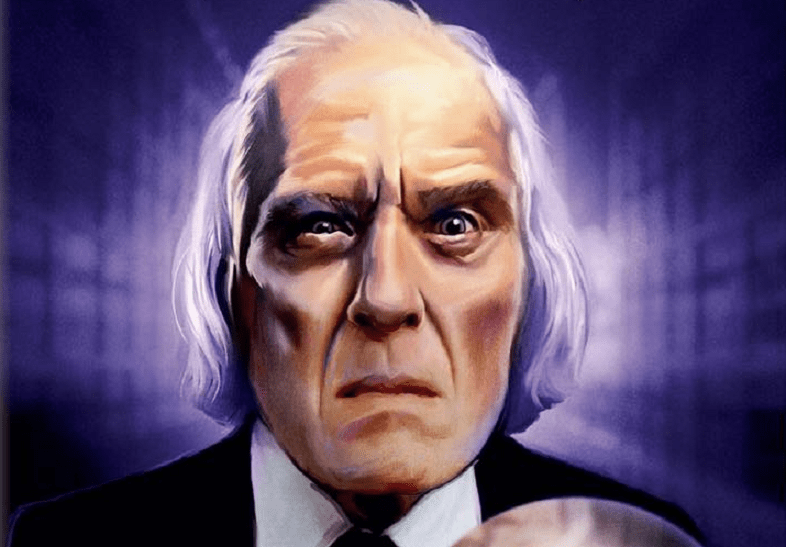
Angus Scrimm as The Tall Man in ‘Phantasm’
Jumping ahead a half decade or so later, Avary’s profile raised significantly after his triumph on the Academy Awards, the place he and Tarantino picked up the gold for Best Original Screenplay. Perhaps surprisingly, Avary elected to make use of his newfound fame to carry a beloved horror franchise again to the large display. “Roger and Quentin received the Oscar for Pulp Fiction, and I acquired a name from Roger like per week after he was on the Oscars telecast. ‘Let’s meet up for lunch. I wish to speak to you about one thing.’ So I went over and met him for lunch, and we mentioned how Hollywood was at his toes. He talked about that he had all of the alternatives to jot down all these large cash initiatives. And he mentioned, ‘You know, when I was working in that editing room on those scripts with Scott, you once told us a germ of an idea about Reggie in a wasteland that might be a good Phantasm sequel. And I’ve been serious about it ever since. I wish to write the epic kickass sequel to Phantasm.’
“And I, truthfully being just a little bit extra mature, tried to dissuade him. I mentioned, ‘There’s no enterprise mannequin for this, Roger. We simply made Phantasm III, and Universal shoveled it out to direct-to-video. So to come back again with the unique solid on this multimillion greenback factor…’ But he was to not be deterred. I assume that was possibly 1996, and over a few two month course of I simply frolicked with him and cheerleaded him as he wrote this script. I assume the thrill round it was Miramax is likely to be actually eager about it. Roger all the time meant that I’d be directing, which was fairly candy. The ensuing script was simply wonderful. It was hyper-violent, and freaky, and simply fully totally different from the rest and taking Phantasm into an entire ‘nother degree, you understand?
“So that was basically how it came to be.”
In addition to Mr. Coscarelli’s personal phrases, the next synopsis was sourced from a pair of Ain’t It Cool News script opinions penned by Lenny Meyer and Tom Joad again within the late 90s/early aughts.

The Bag Plague – idea artwork by Justin Zaharczuk (by way of Life Between Frames)
Billed on its opening web page as “a screenplay about the Apocalypse and Hell on Earth”, Phantasm 1999 opens within the close to way forward for that eponymous 12 months, whereby we uncover that the United States has been divided into three sections: L.A., California; New York, New York; and the Plague Zone. This huge mid-section of the U.S. is demarcated by huge partitions guarded by armed troopers, its stretches of land inside overrun by dwarves and zombies. “Roger had all kinds of influences,” Coscarelli notes. “I mean, we were watching The Omega Man at the time, way before they made I Am Legend. I think that was some of the influence for a depopulated wasteland. And there were some elements of other films like that that were also inspirations.”
It’s within the Plague Zone that the Tall Man reigns, having arrange store in a Mormon mausoleum (the most important of its kind on the planet). “The Tall Man has taken up residence in the giant underground catacombs under the Great Salt Lake, where every Mormon since Joseph Smith is entombed. It’s like a great Mormon mortuary or mausoleum, this secret thing that Roger came up with. A little transgressive, but wild.”
Here, our villain has used a model of the yellow ooze he’d beforehand employed as embalming fluid to create “the Bag Plague”. This totally deadly illness swells its sufferer’s heads to the purpose that their noggins explode, spraying the encompassing space with pus and bone fragments fired at such pressure that they’ll penetrate metal – all in service of infecting much more individuals with the plague (dubbed “Baggers” after their an infection). “It would cause people’s heads to swell up and pop,” Coscarelli laughs. “And when they popped, it was like a blast zone around it. If you’ve got a droplet of it in your mouth, it was like 99% fatal.”

Baggers – idea artwork by Justin Zaharczuk (by way of Life Between Frames)
Meanwhile, four-barrel shotgun-totin’ ice cream man and Phranchise hero Reggie is reintroduced, “kind of as a hardened warrior,” Coscarelli reveals. “He’s been suffering nightmares which lead him to believe that his longtime friend Mike has been abducted by the Tall Man and is being held in the Negative dimension. Our hero eventually realizes it’s up to him to save his buddy, so off he sets with an arsenal and an armored version of the series’ iconic Plymouth Cuda. “He’s got his tricked out car with the armor plating. The Battlecuda, as it was called.” The solely downside is, Reggie should resign his citizenship to be allowed into the Plague Zone to take action, perpetually condemning himself to the contaminated wasteland.

The Battlecuda – idea artwork by Justin Zaharczuk (by way of Life Between Frames)
“He’s also got a sidekick,” Coscarelli says. “A squirrel monkey named Titi. He’s heading into the Zone … it’s kind of like Escape from New York. You go in there, and you have to renounce your citizenship. You can go in, but you cannot come back out. So he’s going into this place to find him.”

Reggie – idea artwork by Justin Zaharczuk (by way of Phantasm.com web site)
Readers finally uncover that the federal government is conversant in some facets of the Tall Man’s operation – particularly, that his portal room (from the unique movie) permits entry to the Tall Man’s dwelling world. To lastly defeat him, the federal government sends in a bunch of troopers carrying a “universe-destroying” bomb to detonate in his dimension. “Concurrently – this is the other great part of Roger’s script – [there is] a secret government operation, this group called the ‘S Squad’. They’re basically a suicide squad working on behalf of the American government, and they’re led by this freaky, tough commander – Colonel Heckleman. They’ve given him this thing called the ‘Quantum Phase Device’, which is like a relic of the Cold War. In theory, it will dissolve dimensions, but they’d never tried it out so they don’t know. They’ve given this package to the S Squad, which has taken a helicopter into the Plague Zone and made it inside the Tall Man’s dimension.”
This group finally runs into Reggie. “So Reggie’s headed for Salt Lake City. He goes by means of the wasteland, winds up in Salt Lake City, runs into the S Squad who simply arrived and he tries to group up with them, however they suppose he’s simply this civilian. Like, ‘Get out of our way, we have a mission, you’re simply an fool, get outta right here!’
“So Reggie ends up … wandering around, looking for some supplies. He goes into this Piggly Wiggly department store and gets into the basement, and there’s like 5,000 of these people, infected. He accidentally wakes them up, and they all come screaming out and … almost wipe out the S Squad. Reggie saves their ass basically. Now he’s teamed up with S Squad and they’re heading into the Tall Man’s lair, and they’ve got to get over there and complete the mission. Reggie needs to find Mike and they need to detonate the Quantum Phase Device.”

The TallManType – idea artwork by Justin Zaharczuk (by way of Life Between Frames)
Along the best way, readers are handled to the Tall Man’s origin, which reveals him to be an extension of a “corpuscular projector” puppeted by the “Tall Mankind”, an enormous Tall Man head which replaces the villain with a clone each time he dies. In addition, Mike is split into “good” and “bad” variations of himself, whereas the Tall Man’s mausoleum is revealed to be a “hyperdimensional tesseract” which exists outdoors of time and area (that means current day characters might probably run into their youthful counterparts from earlier visits).
The screenplay culminates with Reggie and Co. waging warfare on the Tall Man’s minions inside the catacombs of his mortuary and into his dwelling dimension, with Reggie’s monkey Titi saving his buddy by clawing out the Tall Man’s eyes. “If I’m not mistaken, I think it’s Titi who ends up detonating the device. There’s a big fight, and the satchel with the Quantum Phase Device gets tossed to the side, then the monkey grabs it to finish the mission. It’s really a lot of fun stuff in there. So that’s the story in a nutshell. Really wild, really cool.”
This author wonders if this entry would possibly very effectively have acted as a conclusion to your complete franchise, given the ending. “I think at that time, the idea was to do the series finale, and then do a couple more big ones if it was successful, in that vein. But we just never got there.”
“Roger completed the script, I’m doing handsprings. I really like studying this factor. It’s simply not like any Phantasm there ever was. Then we began procuring it round, and Miramax instantly handed on it. All the opposite studios handed on it. I’m sorry to say that it got here again to my unique intuition, the place they have been like, ‘Well, okay, they’ve made Phantasm, it was theatrical success. They made Phantasm II, it went theatrical. Phantasm III went to video…’ Which was like a graveyard of films again then. There simply wasn’t a enterprise mannequin for coming again with a $10-20 million Phantasm film. That was simply the rote reply we acquired.

Reggie Bannister as Reggie in ‘Phantasm III’ (1994)
“We had a number of situations where we thought we had the movie set up. In 1997, we had a viable distributor that told us they were going to fund it and shook hands on it, and we had to go to the Cannes Film Festival together to have the meeting. Then a week later, it turns out they had just sold the company and the executives were all gone. So it was up and down, those types of situations. It wasn’t that we just gave up on it.”
While makes an attempt to make this enormous sequel continued, Coscarelli was in a position to proceed the franchise at a smaller scale. “In the meantime, I made Phantasm IV, which was super low budget, because I had an opportunity and some money to do that. [It was made] with the idea that it could just be a holding pattern and … there was nothing in it that precluded us making Phantasm 1999. It was always meant to be Phantasm 1999. As you can remember when you were a youth, ‘1999’ just always felt apocalyptic, a doomsday feel about it. But then the turn of the century happened and the title wasn’t relevant. I think there was a Phantasm 2013. Then Roger came up with the Phantasm’s End title, which I was always a little lukewarm on. I didn’t want to end the series! [laughs] But I deferred to his judgment on that.”
It’s at this level within the dialog that Coscarelli reveals that an iconic horror star was lined as much as doubtlessly star on this sequel. “So I made Phantasm IV: Oblivion, and I was looking around for funding for Bubba Ho-Tep at the time. I had been talking to Bruce Campbell about appearing in it, then I met with Roger one day and we came up with the idea of teaming up Bruce Campbell with the Phantasm franchise. Roger and I went and had breakfast with Bruce one day and pitched it to him, and he freaking loved it, with the idea that he would play Colonel Heckleman, the head of the suicide squad who teams up with Reggie. The fans of Evil Dead and Phantasm would have loved it. But, the studio bigshots were clueless.”
Coscarelli additionally notes that he sometimes drew some inspiration from Avary’s Phantasm 1999 screenplay when crafting Phantasm IV: Oblivion and Phantasm V: Ravager. “Roger was always generous about letting me use some influences. In Phantasm IV, we did one sequence … Mike travels through a portal and arrives in Los Angeles, downtown. Deserted Wilshire Boulevard, and there’s the Tall Man just walking down Main Street. Mike runs around the corner and finds his brother Jody, and then Jody says ‘We can’t stay here. The risk of infection is too high.’ Then they go off and continue the movie. So the idea was that we could be in a nice little holding pattern that would then make sense if we made Roger’s film. Then we were able to put in an appearance of the Battlecuda in Phantasm: Ravager at the end, as an homage to Roger’s brilliance.”
So is there any likelihood we’d but see Phantasm 1999 in some type? Given the seemingly definitive ending of Ravager, the prospect for any additional follow-ups appears skinny. “Well, as I’ve mentioned earlier than, I’d like to. When I made Ravager, the fifth movie, I didn’t direct it as a result of I directed 4 Phantasms. How many can one man direct in a lifetime? I feel 4 is sufficient. But I’ve all the time mentioned that I’d be fascinated to observe Phantasm interpreted by means of another filmmaker’s lens, so that chance is on the market. You know, it might occur in the future. I haven’t given it a lot thought recently. The different factor is, it’s a painful factor to consider. I imply, I’m laughing right here, however I ought to truly be crying. Roger’s screenplay might have been a fantastic film. It’s a little bit of a painful topic. But, you understand. Loads of time, a number of water below the bridge.
“I would love to see a graphic novel adaptation of that screenplay, which might be a great entrée and a way to renew interest in it and open up doors for that script one day in the future. And you know, now the timing might be right.”
Comic e-book publishers on the market – the creator of Phantasm needs to place out an adaptation of an unmade sequel penned by an Academy Award winner. Are you listening?
Speaking of Avary, Coscarelli has nothing however sort phrases for his buddy and collaborator. “Roger Avary went on to direct some great movies after that. He created a film called Rules of Attraction… featuring one of the best directorial uses of splitscreen and reverse motion I have ever seen. It was fantastic, almost ‘Kubrickian’ in nature. It’s incredible. I remember him telling me about it before he started shooting, and I couldn’t even conceive of what he was talking about. Roger can be so enthusiastic. ‘What the hell is he talking about?’ And then I watched the movie and I got it. A good guy and a great talent, and I wish we could have brought this movie to the big screen.”
In closing out our speak, Coscarelli gives his remaining ideas on this Phantasm that by no means was, however would possibly but be (in some type). “Roger was really thinking big. I think that’s the lesson I took from him. You know, why are we always thinking so small? And I’ll tell you why, because my budgets are always so limited. [laughs] But what I learned from it was to try to not be restrained in my thinking, creatively. Thinking big is never wrong, and that’s what Roger did on that project. That really impressed me.”
Very particular due to Don Coscarelli for his time and insights.
This has been Phantom Limbs, a recurring characteristic which takes a take a look at meant but unproduced horror sequels and remakes – extensions to style movies we love, appendages to horror franchises that we love – that have been sadly lopped off earlier than making it past the planning phases. Here, we chat with the creators of those unmade extremities to achieve their distinctive perception into these follow-ups that by no means have been, with the discussions standing as hopefully illuminating however undoubtedly painful reminders of what might need been.
Works Cited:
Meyer, Lenny (1998, December) A take a look at Roger Avary’s remedy to PHANTASM 1999. Retrieved May twenty first, 2022 from Ain’t It Cool News web site: http://legacy.aintitcool.com/node/2707
Joad, Tom (2000, March) TomJoad survives Roger Avary’s PHANTASM. Retrieved May twenty first, 2022 from Ain’t It Cool News web site: http://legacy.aintitcool.com/node/5369
Hamman, Cody (2013, December) Film Appreciation – Phantasm 2013 A.D.. Retrieved May twenty first, 2022 from Life Between Frames web site: https://lifebetweenframes.blogspot.com/2013/12/phantasm-2013-ad.html
Silver Sphere Corporation (2021) The Phantasm Timeline. Retrieved May twenty first, 2022 from Phantasm.com web site: https://www.phantasm.com/history
Source link
#Phantasm #Coscarelli #Details #PostApocalyptic #Movie