
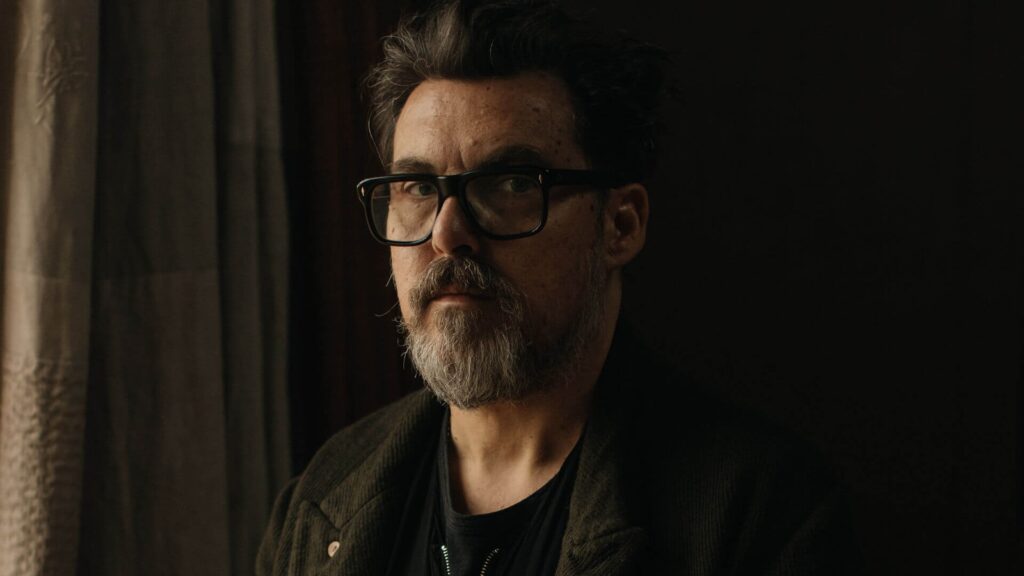
Joe Wright isn’t any stranger to interval dramas, having delivered movies like Pride & Prejudice (2005), Atonement (2007), and Anna Karenina (2012). He can also be no stranger to creating tasks revolving round controversial historic and political figures, with the drama Darkest Hour (primarily based on Winston Churchill’s life and instances) in his oeuvre. But with Mussolini: Son of the Century, he’s difficult himself anew.

The eight-episode present takes on the founding father of fascism with a blunt, frantic pressure and dives into his psyche with modern technical ability. Based on the 2018 novel M: Son of the Century by Antonio Scurati, the present stars Luca Marinelli as Benito Mussolini and chronicles his political and private issues. In an unique interview with Hindustan Times, the Academy Award-nominated author and director opened up about his curiosity within the topic, the provocations it demanded, and extra.
‘He was really someone who was interested in control’
In the present, Mussolini is launched straight, as he confronts the digicam, breaking the fourth wall. Joe talks about that call and provides, “We really talked a lot about addressing the camera, and who he was addressing to… We had these grand ideas that he was talking to history, or he was talking to his soul. In the end, we sort of came back to something really simple, that he was really talking to the audience. The viewer. The person watching the television, the screen. He was really someone who was interested in control, and he was intent on controlling his own narrative.”
He continues, “As the show progresses, he loses control of his own narrative. It slips away from him. By the eighth episode, things are unravelling faster than he can control, and so that seemed an interesting depiction of power. At first, a lot of these toxic, male, power-hungry characters think that they can control everything. In fact, what they discover is that as the power grows, they gain less and less control. The narrative kind of takes over.”
The director shares how the challenge got here to him. “It was 2021, when I was talking to Lorenzo Mieli, the great Italian film producer, who said if I would be interested in doing this project about Mussolini,” he provides. “I said I would only be interested in doing it if I were to do all eight episodes. I was not interested in just setting it up and walking away.”
Joe reveals how the phrase ‘fascism’ and its that means developed as he grew up. “When we were kids, we branded the word ‘fascist’ a lot, without ever understanding what it meant. As teenagers, the police were fascist, the school teachers were fascist,” he says. “But we didn’t really know what that word meant, and then as we emerged into the public consciousness… it felt important to understand where it came from. What it really meant, what were the root causes of it, what were the implications moving forward… and so it was really a study of that word and the man who created that word.”
‘Fascism is not about anything; it is against everything’
The present makes the distinction between fascism and socialism within the very first episode, the place socialists are described as those that are merely ready. They by no means act. When requested if he thinks fascism as an thought additionally thrives, and continues to take action, with this aggressive notion of confrontation, Joe says, “Yeah, it is. At one point in the show, Mussolini also says that fascism is not about anything; it is against everything. It is the force that works in the contrary. It is a negative force; it is against. I think that the question of why the socialists would discuss and not often act is because they have a conscience. Possibly, or at least some of them! Whereas Mussolini freed himself from that conscience and was able to work from an entirely amoral position. Which does mean that one gets things done, but unfortunately, a lot of people suffer in the course of that action.”

‘Luca Marinelli is a complete genius!’
Italian actor Luca Marinelli, who performs Mussolini within the present, delivers an amazing efficiency. Joe went on to speak about their collaboration and mentioned, “He appears nothing like Mussolini! Yet he’s, I believe, an entire genius. I might somewhat solid essentially the most gifted actor than somebody who appears the closest to Mussolini. He has this extremely highly effective creativeness, and if he imagines one thing, then the viewers imagines it too. So in a short time, we droop our creativeness and enter Luca’s imaginative world. For me, that was thrilling. He was a rare collaborator and, actually, one of many nicest guys one would doubtless meet. He is much from Mussolini, within the sense of that poisonous masculinity as one might presumably think about. It changed into a really, very shut and loving collaboration.
The director goes on to broaden on his preliminary method to the topic and the way it wanted an vitality to its proceedings. “What one really does is start with the themes of a piece. What the show is about, and here, the form of the show is guided by the themes,” he says.
“Here, the themes are violence and toxic masculinity politicised to become fascism, so it needed that kind of energy. Researching as it did, the kind of cultural world around Mussolini, I was looking a lot at futurism. So futurism has this propulsive energy coming out of the First World War… the first mechanised machines were going to save the world. It was just in a way people felt the same way about computers.”
‘The concerns of the populace that time- just as now- are legitimate’
He goes on so as to add how his collaboration with Tom Rowlands of The Chemical Brothers, who scored this present. “So the kind of aesthetics of futurism seemed to be mirrored by the Techno Brothers’ music, with whom I have had a long collaboration. Once I made that musical choice, the visual aesthetics kind of fell into place. So yes, a lot of it was guided by that musical choice.”
Has making the present given the director any new perception into how fascism as an idea has managed to seep into up to date international politics? Joe says, “Yeah. I feel like I went through a period in my thirties when I became less interested in politics. I gained that interest back during Brexit in 2016, when I suddenly felt the responsibility to get to grips with what was going on in the world.”
“What Mussolini did was, he invented far-right populism. What he did with his newspaper sort of went that way. The concerns of the populace that time- just as now- are legitimate. But then he took those legitimate concerns and exploited them to his own ends. We see that happening around the globe now. So the parallels of it look different, but the roots are the same,” he concludes.
Mussolini: Son of the Century releases on Mubi India on September 10.
Source link
#Joe #Wright #making #present #Mussolini #felt #vital #perceive #fascism #Interview