


If you may get over questions of grace and style about Mahesh Bhatt fictionalising his extra-marital affair with Parveen Babi for the fourth time, you would possibly take pleasure in the brand new Voot collection Ranjish Hi Sahi. The title, which means “So what if there is anguish?”, is impressed by the Ahmed Faraz ghazal of the identical identify, made well-known by Mehdi Hasan. It is about pining for a long-departed lover. Bhatt’s makes an attempt at doing justice to the loaded title is commendable.
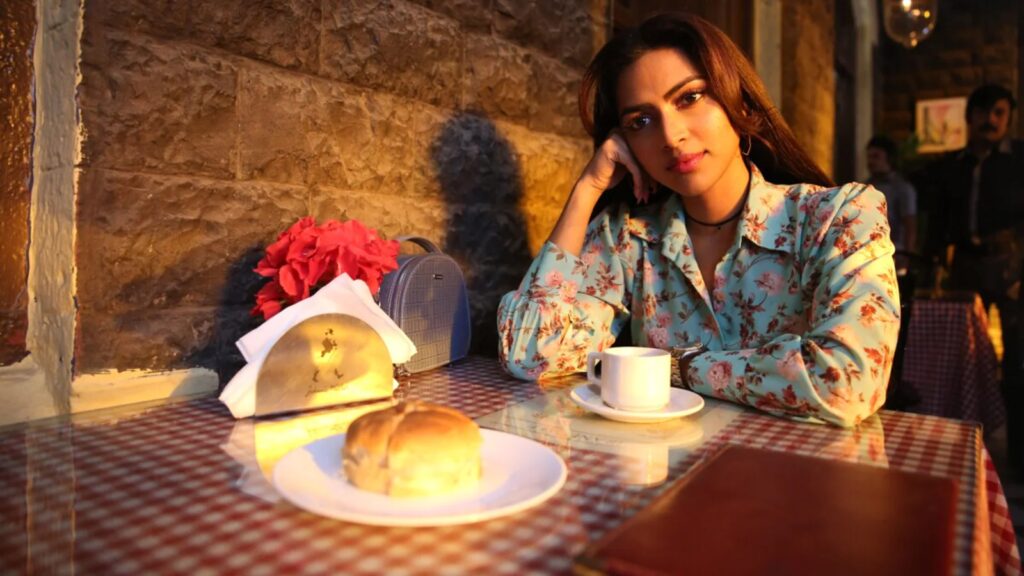
Competent performances, particularly by Amala Paul because the Babi stand-in Amna Parvez, and an enticing screenplay by director Pushpdeep Bharadwaj, make Ranjish Hi Sahi constantly watchable. Tahir Raj Bhasin is ample because the fiery, struggling filmmaker Shankar Vats, Mahesh Bhatt’s newest on-screen model. Amrita Puri brings lots of dignity to the position of his spouse, Anju, impressed by Kiran Bhatt.
Bhatt beforehand explored his affair with Babi whereas he was married to Kiran Bhatt in Arth (1982) and Phir Teri Kahaani Yaad Aayee (1993). In 2006, he returned to the topic with Woh Lamhe, directed by his nephew, Mohit Suri. In comparability, Ranjish Hi Sahi, being an internet collection, will get the time to supply a 360-degree view of the Mahesh Bhatt-Parveen Babi-Kiran Bhatt saga.
Arth seemed on the relationship from the attitude of the struggling spouse, attempting to construct a brand new life after her husband leaves her. Phir Teri Kahaani Yaad Aayee and Woh Lamhe have been lesser efforts that have been fairly faraway from the real-life occasions that impressed them.
Ranjish Hi Sahi, in distinction, takes the viewers straight into the Seventies, when Mahesh Bhatt was a struggling filmmaker and Parveen Babi was among the many prime stars of the day. We get lots of spot-the-real-person-this-character-was-inspired-by moments. There’s Kabir Bedi, Zeenat Aman, Shakti Samanta, and lots of extra. (The actors chosen to play Vinod Kumar and Amitabh Bachchan gave me a headache, particularly when the dashing Tahir Raj Bhasin has the Mahesh Bhatt position). We get an understanding of Mahesh Bhatt’s humble origins when he was simply beginning out as a director.
What is especially new in Ranjish Hi Sahi is the empathy and kindness with which every character is explored. It’s virtually as if Mahesh Bhatt is forgiving himself for his shortcomings and sins as husband, father, lover and son. This is fantastically depicted in a dialog scene within the closing episode between Shankar and his mom, Rukhsar, performed by Zarina Wahab.
I did cringe at many cases the place the writing is attempting justify the present’s existence. It is consistently prompt that Bhatt owed it to Babi and her reminiscence that he instructed their story truthfully, one final time, since she was such an enormous a part of his life, and Babi’s legacy has been tarnished through the years with rumours and gossip about her psychological well being, dependancy points, promiscuity, the checklist goes on.
A fast recap of the real-life story, which we all know because of Mahesh Bhatt utilizing cinema as confession sales space: Mahesh Bhatt is the son of filmmaker Nanabhai Bhatt and actor Shirin Mohammad Ali. (This battle a couple of Hindu father by no means legitimising his relationship together with his Muslim lover was fictionalised in Bhatt’s final movie as a director, Zakhm, earlier than he returned with the pointless Sadak 2 in 2020). In the 70s, Bhatt was attempting to make ends meet as a director whereas striving to satisfy his artistic imaginative and prescient.

A whirlwind affair with Parveen Babi, who was contemporary off of a relationship with Kabir Bedi, triggered Bhatt’s private life to tailspin. But this turned out to be the booster shot his profession wanted. Bhatt ultimately moved on from Parveen Babi, who, identified with paranoid schizophrenia, left the movie trade behind in 1983. The yr earlier than, Arth’s launch catapulted Bhatt to immediate fame. She died in 2005. The subsequent yr, Bhatt rolled out Woh Lamhe.
The South Indian star Amala Paul, greatest recognized for her Tamil movies, actually outshines Smita Patil, Pooja Bhatt, and even Kangana Ranaut, who performed Parveen Babi’s earlier iterations. With her extraordinarily expressive eyes, Amala brings a feral depth to her scenes. It’s an author-backed position that gives her hundred alternative ways to showcase her vary. She is extremely adept in switching between feelings in a single scene, greatest seen within the final episode, when Amna lastly meets Anju.
Also learn: Kaun Banegi Shikharwati evaluation: Even Naseeruddin Shah and Raghubir Yadav can’t save dangerous writing
Bharadwaj’s mildly melodramatic remedy of street-level realism is typical Bhatt. Compared to the typical net collection immediately, Ranjish Hi Sahi feels old-school: photographs are allowed to linger, performances can breathe, the background rating is not intrusive. As anticipated from a Bhatt manufacturing, the present is aided by a strong soundtrack, that includes tunes by Aabhas & Shreyas and Prashad Sashte, with lyrics by Ravi and Shakeel Azmi.
Despite the air of exploitation that hangs across the premise, Ranjish Hi Sahi is incessantly touching with its earnestness. What we see is the story of a person attempting to do the appropriate factor. With Arth, for instance, Bhatt was much less type to himself. It was clearly a product of guilt. Ranjish Hi Sahi seems like a product of misty-eyed remembrance within the autumn of his life.
Source link
#Ranjish #Sahi #evaluation #Amala #Paul #shines #Mahesh #Bhatts #mistyeyed #tribute #Parveen #Babi #Web #Series