

Welcome to the Hammer Factory. This month we dissect The Evil of Frankenstein (1964).
While Hammer Studios has been in enterprise since 1934, it was between 1955 and 1979 that it towered as one of many premier sources of edgy, gothic horror. On high of ushering the well-known monsters of Universal’s horror heyday again into the general public eye, resurrecting the likes of Frankenstein, Dracula and the Mummy in vivid coloration, the studio invited performers like Christopher Lee, Peter Cushing, Ingrid Pitt and so many extra to step into the style limelight. Spanning a library housing over 300 movies, Hammer Studios is a key a part of horror historical past that till just lately has been far too troublesome to trace down.
In late 2018, Shout Factory’s Scream Factory line started to deal with bringing Hammer’s titles to disc within the US, lastly making lots of the studio’s underseen gems accessible in packages that supplied nice visuals in addition to insightful accompanying options. Over the course of this column, I’ll deal with these releases, gauging the movies in context of the Hammer Studio story in addition to analyzing the deserves of the discharge. It’s time to focus on the ability, affect and affect of Hammer Studios and ignite new dialog surrounding some forgotten classics.
The Context
The Curse of Frankenstein (1957) marked a historic turning level for Hammer Studios. Despite the danger of failure within the face of company lawsuits and the viewers’s potential unwillingness to simply accept an audacious new interpretation of a narrative so deeply embedded within the popular culture consciousness, they managed to craft a massively profitable movie that not solely solidified Peter Cushing because the definitive Baron Victor Frankenstein however that catapulted Hammer to the forefront of mainstream style filmmaking.
Still, Hammer founder James Carreras was unhappy with how Warner Brothers had dealt with their facet of the partnership with Curse and its launch, opening the door to new studio accords. Shortly thereafter, Hammer signed a long run cope with Columbia, amongst the initiatives of which have been a Frankenstein sequel and an anthology TV sequence based mostly on the property. At the identical time, Hammer started a profitable relationship with Universal, regardless of their misgivings concerning Curse, with the discharge of Dracula (1958).
Months earlier than the discharge of The Revenge of Frankenstein (1958), the observe as much as Curse, a 3rd movie was introduced, at the moment known as Fear of Frankenstein. On high of that, James Carreras, Anthony Hinds and Jimmy Sangster had put collectively the pilot for Tales of Frankenstein. All of that’s to say, Hammer was able to propel their burgeoning franchise into the stratosphere of cross platform horror leisure.
When Brides of Dracula (1960) was launched, Peter Cushing had a change of coronary heart concerning his profession path and determined to step away from horror movies for a time, revealing a worry of being typecast. While he made different movies for Hammer, akin to Sword of Sherwood Forest (1960), Cash on Demand (1961) and Captain Clegg (1962), reprising the Baron was low on his checklist of priorities. As it was, Fear of Frankenstein disappeared from the manufacturing schedule with out acknowledgement. Couple that with the truth that the Tales of Frankenstein pilot was not picked up for a sequence run and it appeared that the momentum of Hammer’s Frankenstein saga had flickered out simply as shortly because it had initially flared up.
Years later, following a refreshed cope with Universal Studios, Hammer was given the go forward, and a much bigger price range, to do what they have been so strictly prohibited from in The Curse of Frankenstein. James Whale’s Frankenstein (1931) was now not off limits, together with Jack Pierce’s iconic make-up. With an agreed upon launch date effectively earlier than manufacturing went underway, the entire film existed on an extremely tight timetable. After convincing Cushing to return, Carreras tried to recruit Jimmy Sangster to write down and produce. However, busy with the screenplay for Hysteria (1965) and seemingly uncomfortable with the expectation of a speedy turnaround, he dropped out shortly after becoming a member of the manufacturing. Without the important thing artistic minds of Terence Fisher, who was additionally busy with The Gorgon (1964), and Jimmy Sangster, this left Anthony Hinds to conceive and write the image in a matter of six weeks.
Simultaneously, John Gilling turned in what Hinds felt was a subpar script to The Gorgon which required Hinds to do a full rewrite. Given the workload and stress for fulfillment, Hinds turned to the studio’s stock of unused scripts and pitches- particularly these supposed for the deserted anthology sequence. He landed on a Peter Bryan penned story supposed for Episode 5 of the present, regarding a touring circus performer adept in hypnotics, enabling minds to meld with Frankenstein’s unholy creation. With the story as his roadmap, he shortly penned what would grow to be The Evil of Frankenstein (1964). Soon after, famend cinematographer Freddie Francis, who had already directed Paranoiac (1963) and Nightmare (1964) for Hammer, was introduced in to helm the movie within the stead of Terence Fisher, with the hope he may carry a gravitas to the image that matched the earlier two entries.
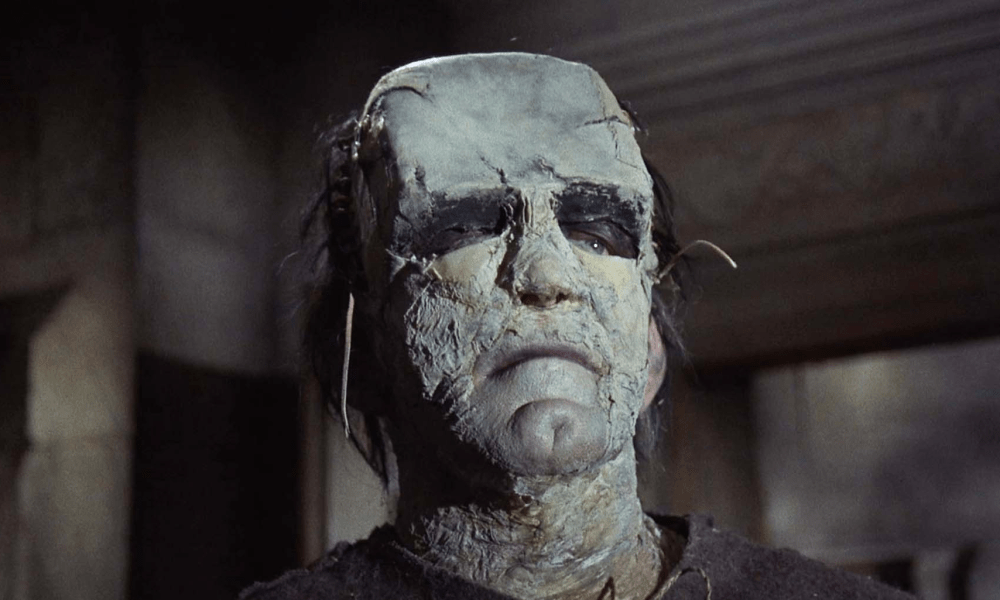
Roy Ashton was given the difficult job of crafting the look of the monster, trying to mix the acquainted trappings of Pierce’s work with the trendy sensibilities Hammer was attempting to faucet into. After almost 2 hundred makes an attempt at a design and no consensus from producers, he crafted a scale mannequin of what the final opinion appeared to favor. With no consideration or regard to the quantity of effort and time that went into making such a forged, the assorted producers from Universal and Hammer alike continued to request adjustments and alterations with the expectation of breakneck flip round occasions. Finally, with solely days till the shoot, a call was made— maybe rashly— and the make-up was created with understandably disappointing outcomes.
The ensuing movie is one torn between the trimmings and kinds of yesteryear’s Universal basic monster film and Hammer’s gothic sensibilities, in the end satisfying neither camp completely. Francis crafts a fantastic tapestry, placing his eventual Oscar profitable expertise with the digital camera to affective use, however it’s not sufficient to avoid wasting the woe’s imposed on the image by the script. Ignoring the comparatively tight continuity established by Terence Fisher’s first two Frankenstein outings, this one rewrites historical past and creates a far slighter and fewer attention-grabbing narrative. Retreading floor with a creature that appears comical compared to Christopher Lee’s authentic model, the movie infuses the affair with considerably foolish subplots that actually really feel like they belong on the smaller display screen from which they have been pilfered.
Still, the movie shouldn’t be with out its deserves. The stunning pictures typically permits straightforward emotional entry to the movie, lending weight to scenes, characters and story developments that may have in any other case been devoid of it. The performances are all robust as effectively, anchored by one other contemplative flip because the Baron from Peter Cushing, and it’s his musings, actions and scheming that, no matter its flaws, makes Evil an integral part of Hammer’s cinematic canon.
The movie failed to attach with audiences commercially and landed as a disappointment to Hammer and Universal alike. It appeared that by trying to recapture the essence of one thing lengthy passed by, the creators overlooked what made their preliminary forays into the Frankenstein mythos so profitable. Luckily, the lesson didn’t appear to be misplaced on these concerned. The way forward for the franchise would go on to carry a lot of the daring and artistic ideology so important to Curse and Revenge, leaving The Evil of Frankenstein as an enchanting oddity within the cycle and a cautionary story for all nice franchises that will fairly look backward than into the long run. After all, who is aware of what The Curse of Frankenstein may need been, if not for its enforced incapability to be what had already come earlier than it.
The Film
“Why can’t they leave me alone? Why can’t they ever leave me alone?”
The forest is lush and calm as a river gently flows beside an previous cabin close to its financial institution. An aged couple emerges, distraught and grieving. They fail to spot the hand rising out of the scraggly brush, or the ginning interloper it’s hooked up to as they stroll away. Inside the cabin is the physique of a younger man, a cross in his arms, mendacity lifeless on a desk. A younger woman friends out from behind a neighboring door as a window bursts open, filling the small area with an eerily violent wind.
The physique begins to maneuver towards the window and the woman screams. The man from the bushes drags the physique out into the woods, grinning maliciously. The little woman bursts from the cabin and into the evening. She follows the trail, looking out desperately for assist and halts screaming as soon as extra when a hand grasps at her from the darkness. But this time the hand shouldn’t be of the corpse nabber, however that of the chilly, calculating visage of Baron Victor Frankenstein.
The Evil of Frankenstein is eager to remind its viewers simply who it’s they’re coping with, traversing all too acquainted territory and offering a reintroduction of kinds to the Baron and his dastardly deeds. Its energy, which holds true for the remainder of the movie, is in its visible execution. Directed by Freddie Francis, each shot is infused with shadow and depth, each angle with character and function, distracting from the by-product, disjointed and infrequently meandering storyline that contains this considerably difficult entry in Hammer’s Frankenstein sequence.
And but, specializing in the Baron’s proclivities for the primary ten or so minutes of the movie does have its benefits. For instance, as an alternative of chopping to static title playing cards for the credit score sequence, Francis as an alternative chooses to carry on Peter Cushing’s Baron as he performs surgical procedure on his freshly acquired corpse in a single, uninterrupted shot. Set in opposition to Don Banks’ placing and thunderous rating, the scene is a robust showcase to the eye to element with which Cushing approached the function, having sought out recommendation from practising surgeons and practiced his motions to make sure his actions would match that of a medical skilled’s.
The opening additionally offers a style of the acquainted on the subject of set dressing and manufacturing design, showcasing his elaborate laboratory which evoked cartoonish-mad-scientist greater than any such place of experimentation Peter Cushing’s Baron had but to search out himself. Complete with massive tubes of liquids bearing strikingly vibrant blues and yellows, thick, misty smoke bathed in intermittent inexperienced mild and all of the twisting wires, tubes and mounted diodes one may think about being essential to resurrect the lifeless.

It’s within the laboratory the place the movie first makes clear its intentions to harken again to 1931’s Frankenstein, merging the brand new with the previous and tackling the acquainted story with the entire darkish, conniving charisma that Peter Cushing first delivered to the function in 1957. For, earlier than lengthy, the Baron’s deeds catch as much as him and he’s once more pressured to flee, this time again dwelling to his manor in Karlstaad. It’s there {that a} flashback that serves as a redux of The Curse of Frankenstein, if not a very lengthy one, additional cements Evil’s need to be a dearer and maybe trendy model of one thing acquainted versus a completely distinctive outing.
Joining the Baron on his journey is Hans, his compulsory, younger, male devotee, performed with enthusiastic aplomb by Sandor Elès. Hans is effectively conscious of his grasp’s intentions and is very happy to conform, suggesting an affinity for the Baron that appears to unfold past tutor and pupil and into the realm of unrequited affection. Still, the Baron stays centered on his distinctive goals, so it stands to cause that such feelings would by no means even register on his radar regardless.
On their means into city they encounter Rena, solely named within the TV model of the movie, a deaf-mute beggar woman whom they rescue from a gang of lecherous males. Katy Wild performs Rena with convincing soul, crafting a fancy character with nothing greater than mannerisms and gestures, offering the movie with certainly one of its extra fascinating characters. Her incapability to speak and join with others makes her uniquely positioned to empathize with the creature all Frankenstein movies will finally concern themselves with.
Once on the town the story fractures, introducing the arrival of a neighborhood carnival in addition to the truth that the Baron’s dwelling and all of his possessions have since been ransacked by the city in his absence. Here, the movie begins to really feel considerably episodic, betraying its tv origins, as Frankenstein first embarks on a quest to retrieve his ring from the gluttonous, lustful Burgomaster, performed with pleasant nastiness by David Hutcheson, earlier than finally uncovering the monster from his previous.
Still, there’s a pathos that springs from Peter Cushing’s Baron that feels contemporary and wounded right here. Despite the break in continuity, one will get the impression that the Baron has certainly lived by the occasions of the prior movies, skilled his continuous failures and feels at a loss when he returns to his dwelling to search out nothing however destruction and decay. He laments his place, acknowledges the goal that follows the misunderstood thoughts of a genius (at the very least, as he sees it) and the style through which Peter Cushing espouses these inside ideas manages to conjure some very actual empathy for the person who so recklessly offers life to broken beasts.
In city additionally they encounter a circus hypnotist named Zoltan. Peter Woodthorpe brings Zoltan to life with the entire seedy appeal that an emissary of the underworld may command, crafting a believably convincing however altogether untrustworthy scamp who may simply as simply be one of many movie’s heroes as certainly one of its villains. Frankenstein takes observe of him immediately upon seeing him onstage, seemingly conscious of his usefulness however uncertain of how one can exploit it, one thing the movie circles again to additional alongside.

These sequences will not be devoid of leisure, removed from it. Watching Peter Cushing fuming in a bar whereas garbed in a masquerade masks earlier than storming the mattress chambers of the previous Burgomaster and his younger buxom spouse is a pleasure, endowing him with a little bit of action-hero smarminess that had hitherto been absent from the Frankenstein set. They could end in some tonal inconsistencies and narrative clunkiness, however there are actually worse methods to spend a runtime.
Having crossed the Burgomaster, the Baron is once more on the run. This time it’s Rena who involves his assist, main him and Hans to a hidden cave close by. Again, Francis’ artistry is on full show right here, the pure mild eking into the cave offering nuanced shade and depth that displays the characters psyches and presents the type of fantastical setting the place one may believably encounter the frozen physique of a reanimated monster from the previous. Shortly thereafter Frankenstein does certainly find his monster, frozen in ice, as if in stasis, ready for the Baron’s inevitable return.
Frankenstein, Rena and Hans make brief work of crafting a hearth to soften him out of his frozen jail and shortly after have the creature again within the decrepit manor for additional research. The monster, performed by Australian wrestler and first time actor Kiwi Kingston for his imposing stature, has a rueful means about him that may’ve been simpler had it not been for the poorly executed make-up. Intending to evoke Jack Pierce’s authentic look, Roy Ashton’s monster turns up with a squared off head that resembles the type of papier-mâché used to assemble a piñata for a kid’s celebration. With the bolts on the highest of the cranium as an alternative of the neck and the jagged, poorly constructed design, the actor’s head is much less hid— clearly an individual peering by a masks. There is not any melding of monster and man, fairly an unsuccessful impact that holds the fiend again from reaching the pathos essential to spark emotional affect.
Without a charming creation to anchor the guts of the again half, the troubles within the narrative grow to be extra obtrusive. Upon realizing that his monster’s mind is undamaged however not functioning, Frankenstein decides to enlist the assistance of Zoltan to spark the psychological connection required to grant his creation its sentience as soon as extra. Oddly, this locations Zoltan within the movie’s driver seat, successfully sidelining the Baron in lieu of the form of science that borders on magic much more so than the types of issues Victor does in his lab with lifeless our bodies and harnessed lightning bolts.
The ultimate act of the movie transforms right into a revenge story with Zoltan on the helm, sending the monster on missions of homicide and mayhem to quench the deranged hypnotist’s thirst for retribution in opposition to the city that ousted him. While it’s fairly enjoyable to look at Peter Woodthorpe’s Zoltan grow to be progressively sweatier and extra mad, it feels much less and fewer of a bit with the rest of the movie. All the whereas, Rena turns into extra emotionally intertwined with the monster in one of many movie’s extra poignant and engaging plot traces, one thing that will have resonated higher in a extra centered movie alongside a extra convincingly designed creature.
All in all, by the point the movie reaches its compulsory mob of pitchfork clutching townsfolk on their march to Frankenstein’s lonely manor, the climax feels preordained fairly than earned. The Baron fights for the lifetime of his creature, having been largely absent from its goings on within the ultimate thirty minutes and Zoltan is pushed apart as soon as extra in order that Frankenstein himself can swing by the fireplace and try, in his personal warped means, to avoid wasting the day. As with the rest of the movie, the finale is gorgeous and placing, however devoid of a lot weight and the form of foregone conclusion one may count on of a deus-ex-machina model ending to a weekly televised Frankenstein journey than that of a characteristic.
In the tip, like so many Hammer films that got here earlier than and after The Evil of Frankenstein, the townsfolk and the movie’s surviving characters watch on from a distance because the Baron’s homestead burns to the bottom. What was considered by some as evil has been thwarted and, as soon as extra, not understanding or progress, however destruction guidelines the day.
While the Baron emerges from the story extra empathetic than ever earlier than, having finished little however rob a grave and place his belief within the flawed circus performer, the muddy nature of the narrative and the shortage of cohesive parts reduce the general affect. The entry actually has its worth, most notably Freddie Francis’ penchant for visible acuity, however on the entire it fails to attain the heights so desired by its financiers. Indeed, The Evil of Frankenstein feels fairly slight compared to its household of seven, serving extra as a reminder of what works so effectively in superior efforts than its personal typically inconsistent strengths.

The Special Features
This launch comes geared up with a model new 4K scan of the interpositive by Shout! Factory in its 1.85:1 codecs, changing the beforehand accessible cropped 1.78:1 studio grasp from Universal. The image is textured and colours are placing, notably within the elaborate laboratory sequences, providing an enormous improve from its former launch. The DTS-HD Master Mono monitor preserves the highly effective rating with the vitality required whereas providing crisp dialogue that’s straightforward to discern. It’s an exquisite, definitive bundle worthy of each assortment.
Audio Commentary, by Constantine Nasr
Hammer movie historian Constantine Nasr offers one more informative Hammer monitor on this disc, chronicling the movie in nice element, following its conception, manufacturing and eventual launch.
Describing the movie as “misunderstood but beloved”, Nasr traverses the legacy of The Evil of Frankenstein, overlaying the foremost gamers concerned in its creation: like director Freddie Francis’ potential to make a bland script extra attention-grabbing and Peter ‘Props’ Cushing’s pure tendency to flesh out his personal character and scenes. He goes again to the late 50’s and discusses the challenge’s origins, monitoring it from an unused episode of a Frankenstein TV episode by its unsuccessful industrial launch.
The monitor is backed by authority, respect and care, an indicator of Constantine Nasr’s work and, as is often the case with these commentaries, completely important listening.
The Evil of Frankenstein — TV Version (1:37:47)
Approximately ten minutes longer than the unique launch, this low decision print is tinted crimson however in any other case colorless, except for the occasional little bit of inexperienced. This reduce gives three further scenes commissioned by Universal Studios to increase the runtime for community tv.
These scenes embody the townsfolk discussing a stolen physique in addition to Rena’s backstory. Much of what was shot has to do with Rena’s father desperately searching for retribution in opposition to Frankenstein for profaning the identify of God in addition to creating the monster which so terrified his daughter as to trigger her to grow to be deaf and mute. While there may be an attention-grabbing POV shot of the monster as he approaches younger Rena within the forest, the scenes are largely easy and distracting, awkwardly spliced into the movie and usually disrupting the narrative’s already disjointed movement.
While it doesn’t work and the standard is low, this model is a welcome inclusion as an attention-grabbing curiosity for completists and collectors alike.
The Making of The Evil of Frankenstein (28:30)
(2013, Final Cut Entertainment)
Ported over from the 2013 Final Cut Entertainment UK Blu-ray launch, this bite-sized have a look at the manufacturing narrated by Edward de Souza runs by the gamers, the plot and the legacy of The Evil of Frankenstein, albeit on a reasonably floor degree.
Beginning with what made Evil stand aside from the franchise, the shortage of Terence Fisher and the break in continuity, this characteristic discusses how the movie positioned the Baron as extra sinned in opposition to than the sinner. Anecdotes from the set are shared, akin to Caron Gardner’s tendency to think about black spiders to frighten herself when essential, and Peter Cushing’s burns acquired when he refused to let a stuntman swing into the flames throughout the movie’s conclusion.
The documentary is attention-grabbing and illuminating sufficient, nevertheless Constantine Nasr’s commentary monitor gives a much more in depth have a look at the movie and stands because the superior methodology of exploring it.
The Men Who Made Hammer — Freddie Francis (29:40)
(2020, Shout! Factory)
Tony Dalton, writer of the guide Freddie Francis: The Straight Story from Moby Dick to Glory, chronicles the prolific cinematographer and director’s life from his start in London whereas German zeppelins bombed town to his ultimate shoot with director David Lynch on The Straight Story (1999).
Dalton covers the multitude of movies Francis labored on, mentioning landmark achievements like his work on The Innocents (1961) the place he pushed for black and his eventual partnership with Hammer and Amicus. He discusses the latter half of Francis’s profession and his unlucky typecasting as a horror filmmaker earlier than partnering with David Lynch in an extended and illustrious collaboration that included films like The Elephant Man (1980) and Dune (1984), earlier than profitable an Oscar for Glory (1989). He concludes with Francis’ ultimate sentiment, that he wish to be remembered as a filmmaker, not a director or cameraman, simply as a filmmaker.
Tales of Frankenstein (27:14)
The unreleased pilot of the deserted Frankenstein TV present initially produced within the late Nineteen Fifties, the episode offers a style of what the sequence may need supplied to followers of the franchise. Beginning with a voiceover from a person inside a crystal ball, not all that dissimilar from Lon Chaney, Jr.’s Inner Sanctum Mysteries sequence, the episode goes on to hit all of the basic landmarks of a Frankenstein story. An previous citadel, a stolen corpse and sparking laboratory all function the backdrop to this story of a lady so determined to avoid wasting her dying husband that she enlists the assistance of a defamed scientist to perform it. The outcomes are, as one may count on, disastrous.
The episode is a enjoyable window into one thing that may’ve been, preserved right here as a part of the context and historical past of not solely The Evil of Frankenstein however the Frankenstein cycle as a complete.
A Moment with Caron Gardner (2:24)
(2013, Final Cut Entertainment)
A really transient interview with actress Caron Gardner, the Burgomaster’s Wife within the movie, providing a possibility to speak in regards to the trials and tribulations of being a glamour mannequin in her youth and the way that factored into casting and her profession at massive. Still, she admits that she’s pleased with who she is and her legacy and feels fortunate to have been part of Hammer’s story. It’s a nice handful of minutes that provides a little bit of perception to the manufacturing and the studio’s historical past.
Interview with Assistant Director William P. Cartlidge (8:05)
(2020, Shout! Factory)
Assistant Director William P. Cartlidge remembers his time on set and what it was like working with Freddie Francis. Admitting that the 2 didn’t get alongside all that effectively, Cartlidge talks in regards to the director’s insecurity and the way they approached the movie as being extra about environment than plot. He talks in regards to the basic professionalism on set, notably that of Peter Cushing, and laments that probably the most troublesome a part of the film enterprise is managing the assorted “genius” on set as “there’s just too many of us”. An pleasurable and enlightening interview providing one more distinctive perspective harkening again to a special time.
Interview with Actress Katy Wild (11:19)
(2020, Shout! Factory)
Actress Katy Wild offers a quick abstract of her profession and the way she got here to be one of many supporting gamers in The Evil of Frankenstein. She discusses the seriousness with which she approached the half, searching for fact in her efficiency and desperately driving for authenticity. She delves into the idiosyncrasies of her character and the emotional traumas that led to her destiny. She talks about being raised in a convent and the way uncomfortable a lot of the topic materials was to her and the rationale her character had no dialogue: the producers needed the script to be simpler to write down.
Another enlightening interview on the disc, that additional fleshes out the historical past of the movie.
Theatrical Trailer (2:24)
Green textual content rises over a carnival, “down the years has come a name, one word that strikes terror into all hearts..”
The phrase “FRANKENSTEIN” seems over photographs of the Baron doing his dastardly work. The title seems and the picture cuts to toes being dragged throughout a desk and a bit woman screaming. A fairly younger girl screams from her mattress in a nightdress as a person in his pajamas is thrown in regards to the room. The narrator continues, “the evil of a man who created a monster by crude surgery”. Peter Cushing because the Baron seems in a bar carrying a masks and Peter Winthrope is launched as Zoltan, his darkish eyes filling the body. The the rest of the forged is launched and eventually Peter Cushing leaps by flames towards his creation. The ultimate phrases of the announcer emanate from the display screen, “the greatest chiller of them all!”
Image Gallery (8:05)
On set pictures, candid pictures of the forged and crew, foyer playing cards, publicity pictures, make-up checks, Roy Ashton’s idea artwork for the monster, posters, each home and worldwide, newspaper ads and extra comprise this entertaining time capsule devoted to The Evil of Frankenstein.
Final Thoughts
Despite its announcement in 1958 and the big monetary success of what had come earlier than, it might take one other six years for Hammer to spark life into its third Frankenstein image. Without its artistic belief of Terence Fisher and Jimmy Sangster in addition to an abandonment of continuity, The Evil of Frankenstein was set to be a divergence from its predecessors in model and story, harkening again to the iconography that had made Frankenstein a family identify in 1931. With Universal Studios on their facet and acclaimed cinematographer Freddie Francis on the helm, it appeared Hammer, with James Carreras and Anthony Hinds main the cost, would lastly be capable of craft the form of strong, gothic Frankenstein epic they’d been dreaming of since Peter Cushing had reinvented the character in The Curse of Frankenstein.
The end result was a film overcome with attractive manufacturing design and an professional sense of visible model accompanying a narrative that was as fractured as its filmic execution was assured. At occasions stagnant in its need to remember the franchise’s proudest moments and at others confused in its need to be one thing trendy and thrilling, The Evil of Frankenstein works in matches and begins, failing to attain the cohesion or affect that its Terence Fisher directed brethren tended to reach at.
Shout! Factory brings the movie dwelling on Blu-ray with a Collector’s Edition that places the previous Universal US launch to pasture with a stunning new switch and a slew of particular options that serve to flesh out the historical past, advantage and legacy of this iconic Hammer image as soon as and for all. Amongst the making of and numerous interviews is Constantine Nasr’s important commentary monitor, a characteristic that’s definitely worth the value of the disc alone and one that can undoubtedly foster a newfound appreciation for this typically maligned entry within the Frankenstein cycle. This is a disc completely price searching for out for any horror fan, Hammer or in any other case.

While the committee-like nature of the movie’s eventual manufacturing is what undoubtedly led to its basic misses, its place within the Frankenstein set shouldn’t be underestimated. Putting apart the messy nature of its narrative, it’s right here the place the Baron is first considered with actual empathy, transposing his self-imposed sufferer standing from the earlier two entries to the movie’s actual world and providing a have a look at Frankenstein that will go on to tell subsequent entries, even when the continuities don’t care to replicate it. It’s The Evil of Frankenstein that calls upon Peter Cushing to evolve his efficiency because the mad man so intent on resurrecting what must be lifeless and gone and, regardless of its shortcomings, there isn’t a denying its significance within the franchise and Hammer’s oeuvre.
The fourth Frankenstein movie would once more see Terence Fisher seated within the director’s chair, abandoning any semblance of what had come earlier than in a Frankenstein image and delving into the metaphysical nature of the human soul. Frankenstein Created Woman (1967) would push the boundaries of the horror gothic, asking the bigger— vastly rhetorical— existential questions that the franchise had solely flirted with previously and touchdown in morally murky territory that sparked way more thought than it did startled shrieks from its viewers. In essence, the alternative of the movie that got here earlier than it and, maybe, solely attainable due to The Evil of Frankenstein’s missteps.
The Curse of Frankenstein made Hammer historical past and the franchise’s import within the eyes of the studio and its many followers remained part of the DNA of each subsequent entry. They traverse Hammer’s catalog in keeping with the choices and methods the studio was making on the time and Evil is not any exception. Coming out of the studio’s Golden Age, bolstered by Universal and certain that the franchise which began all of it couldn’t miss, The Evil of Frankenstein was birthed, if not rapidly. As it’s, it’s a fantastic movie with an incredible deal to supply, however one which merely fails to stack up in opposition to the titles which bear its titular identify. However, its classes reverberated and led to what got here subsequent, proving its price, if not within the second, in the long term. It could not have been historic, however like Curse earlier than it, The Evil of Frankenstein acquired these in artistic management to look ahead as an alternative of backward and, on that degree, could be very profitable certainly.

Source link
#Evil #Frankenstein #Fascinating #Oddity #Hammers #Horror #Saga